

Write f/1.4, not “shallow depth of field”
Portraits look like CGI mannequins until you use camera language and imperfect skin. 50mm and f/1.4 beat “half-body, cinematic,” and pores beat “beautiful.”
2026/09/01
Controls this guide covers
cameraUse lens language (`50mm`, `f/1.4`) instead of “half-body, shallow DOF”.
aperture`f/1.4` beats “blur the background”. Models follow camera notes more than adjectives.
faceLock one face across a grid. Unlocked palettes mint a new person per swatch.
Related templates
Browse Portrait & Photography in the gallery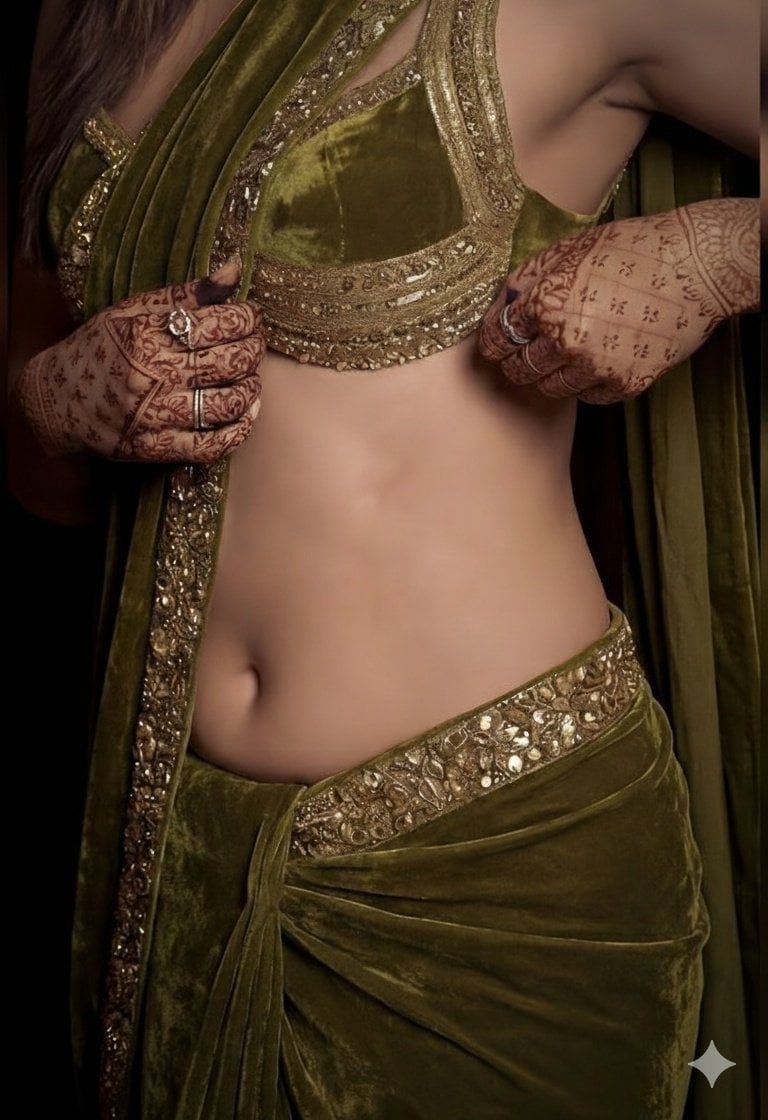
A detailed, high-fashion studio photograph of a woman posing gracefully, wearing a luxurious olive green velvet saree draped elegantly over her shoulder, paired with a matching heavily embroidered sleeveless blouse that highlights her midriff. The lighting is moody and dramatic, accentuating the rich texture of the velvet and giving her skin a subtle, dewy sheen. Her hands are adorned with intricate, dark henna (mehndi) designs, and she is wearing traditional gold earrings, looking directly into the camera with a confident expression.
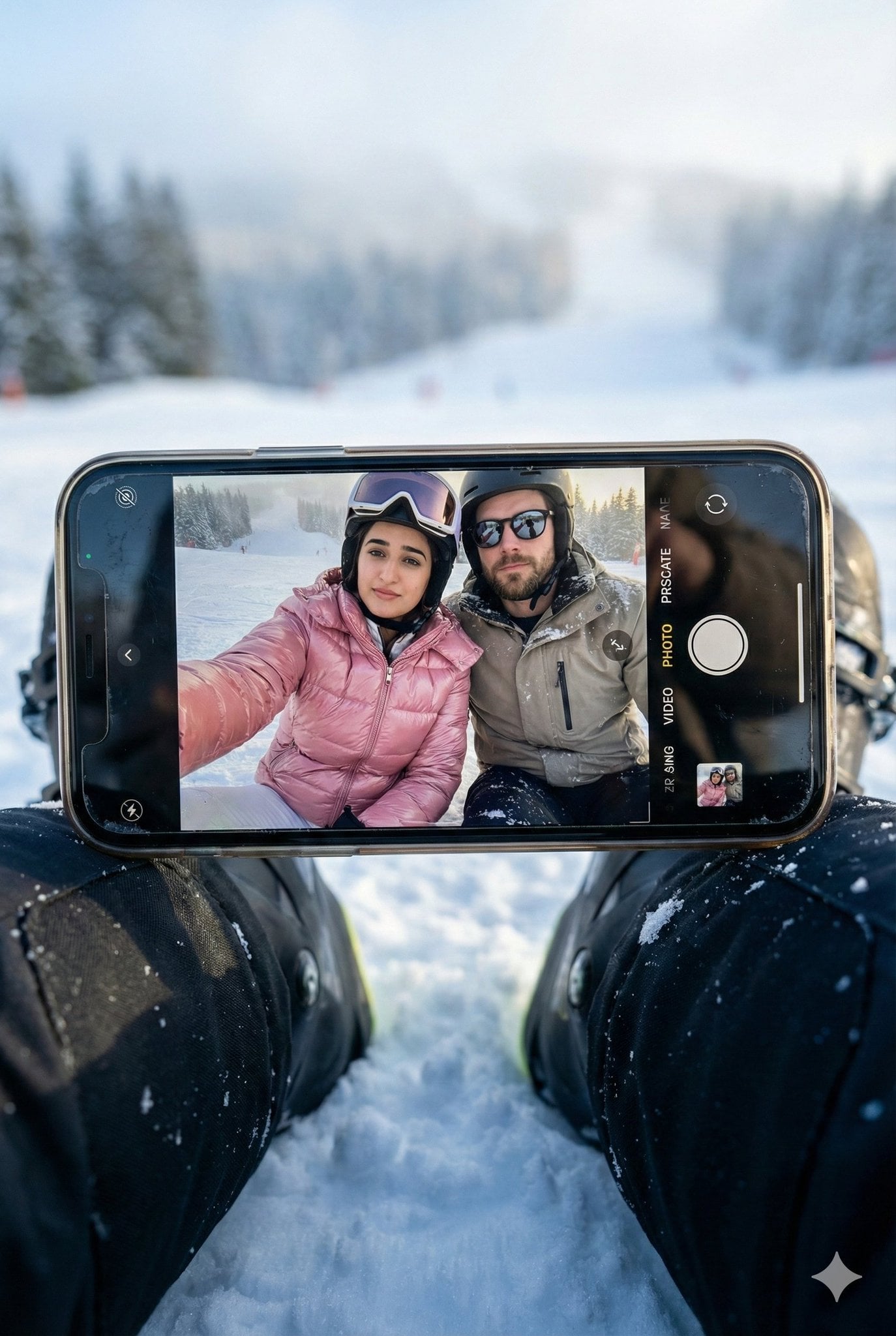
Create a hyper-realistic winter scene in a vertical 3:4 aspect ratio with cinematic realism and natural detail. The foreground features compacted snow with subtle ice sparkle, cool blue shadows, and cold ambient light. A smartphone is placed perfectly horizontally across black ski boots, stable and centered, with visible smudges, micro-reflections, edge highlights, and slight screen glare. The iPhone camera Ul is clearly visible, including icons and the shutter button, reinforcing an authentic, unedited iPhone capture. On the phone screen, Subject 1 and Subject 2 are seated closely together on the snow, framed from a low angle so only their upper bodies are visible, creating an intimate mirror-selfie-style composition. Subject 2 sits slightly forward, holding the phone at arm's length with the phone back visible, wearing a glossy pink puffer jacket with realistic quilting, natural folds, helmet, and goggles; her face is fully clear and visible with a relaxed, confident expression. Subject 1 sits directly beside her, shoulders nearly touching, wearing a neutral ski jacket with light snow dusting, a helmet, and dark sunglasses reflecting the snowy environment: his face is also fully clear and visible, with a calm, relaxed posture. The background within the screen shows a snowy slope and distant ski-area elements softened by realistic depth and atmospheric haze. Lighting blends cool winter tones with warm sunlight reflections, producing natural shadows, lifelike highlights, and subtle imperfections. The final image must feel HD, realistic, candid, and cinematic, with both subjects facial features preserved exactly and remaining 1000% identical to the uploaded images.
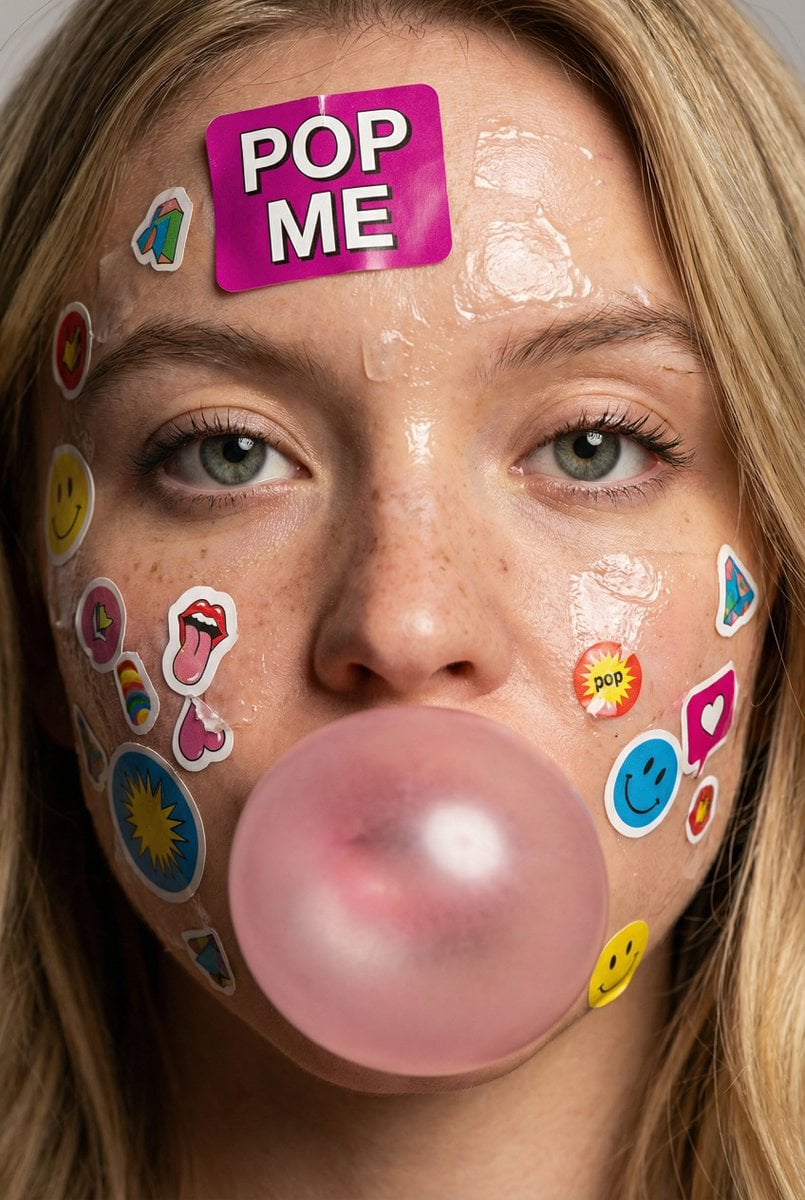
{ "meta": { "image_quality": "High", "image_type": "Photo" }, "global_context": { "scene_description": "Close-up portrait of a young person's face covered with colorful paper stickers and glossy adhesive residue. Central focus on eyes, nose, lips; subject blowing a pink bubblegum bubble. Stickers vary in size, text, icons and layered overlap; hair strands frame face at edges. Skin shows freckles, pores, and sheen from adhesive or moisture.", "time_of_day": "Neutral/studio lighting", "weather_atmosphere": "Indoors/controlled", "lighting": { "source": "Artificial", "direction": "Frontal with slight top", "quality": "Soft", "color_temp": "Neutral" } }, "color_palette": { "dominant_hex_estimates": ["#E7B1B6", "#F6C0D0", "#C9A38C"], "accent_colors": ["Pink","Magenta"], "contrast_level": "Medium" }, "composition": { "camera_angle": "Eye-level", "framing": "Extreme close-up (face fills frame)", "depth_of_field": "Shallow (background indistinct)", "focal_point": "Eyes and central bubble" }, "objects": [ { "id": "obj_001", "label": "Face", "category": "Person (head)", "location": "Center", "prominence": "Foreground", "visual_attributes": { "color": "Light beige skin with pink undertones and freckles", "texture": "Smooth with visible pores, glossy adhesive patches", "material": "Skin", "state": "Sticker-covered, slightly wet/glossy", "dimensions_relative": "Large relative to frame" }, "micro_details": [ "Freckles concentrated on nose and cheeks", "Shiny adhesive residue streaks on forehead and cheeks", "Fine vellus hairs visible", "Pores visible on nose and cheeks" ], "pose_or_orientation": "Frontal", "text_content": null }, { "id": "obj_002", "label": "Eyes (pair)", "category": "Facial feature", "location": "Upper-center", "prominence": "Foreground", "visual_attributes": { "color": "Gray-green irises with dark limbal ring", "texture": "Wet/glossy cornea, visible eyelashes", "material": "Biological", "state": "Open, neutral expression", "dimensions_relative": "Medium" }, "micro_details": [ "Tiny specular highlights on each cornea", "Sparse lower lashes, fuller upper lashes", "Slight shadow under lower lids" ], "pose_or_orientation": "Facing camera", "text_content": null }, { "id": "obj_003", "label": "Pink bubble", "category": "Object (gum)", "location": "Lower-center", "prominence": "Foreground", "visual_attributes": { "color": "Pastel pink", "texture": "Smooth, slightly translucent", "material": "Gum", "state": "Inflated/intact", "dimensions_relative": "Large relative to mouth" }, "micro_details": [ "Two bright specular reflections on sphere", "Seamless edge against lips" ], "pose_or_orientation": "Centered over mouth", "text_content": null }, { "id": "obj_004", "label": "Stickers (assorted)", "category": "Adhesive stickers", "location": "Entire face and neck, concentrated forehead and cheeks", "prominence": "Foreground", "visual_attributes": { "color": "Multicolor: magenta, yellow, blue, white", "texture": "Paper/plastic with glossy varnish, torn edges", "material": "Paper/plastic adhesive", "state": "Layered, partially torn, some wrinkled", "dimensions_relative": "Varied small-to-medium" }, "micro_details": [ "Large 'POP ME' magenta sticker on forehead", "Partial torn sticker fragments near nasolabial fold", "Small rectangular stickers with tiny printed text", "Edges lifting, adhesive shine around perimeters" ], "pose_or_orientation": "Affixed flat or slightly peeled", "text_content": "Multiple small logos and words (e.g., 'POP ME')" }, { "id": "obj_005", "label": "Hair strands", "category": "Hair", "location": "Left and right edges framing face", "prominence": "Background/foreground overlap", "visual_attributes": { "color": "Light brown", "texture": "Fine, slightly wet", "material": "Hair", "state": "Loose strands", "dimensions_relative": "Thin relative to face" }, "micro_details": [ "Individual strands crossing forehead edges", "Slight adhesive sheen on some strands" ], "pose_or_orientation": "Hanging down" } ], "text_ocr": { "present": true, "content": [ { "text": "POP ME", "location": "Forehead", "font_style": "Bold/Decorative", "legibility": "Clear" } ] }, "semantic_relationships": [ "Stickers are affixed to Face", "Bubble covers mouth, partially obscuring lips", "Adhesive residue creates glossy highlights on skin", "Hair strands frame and partly overlay stickers" ] }
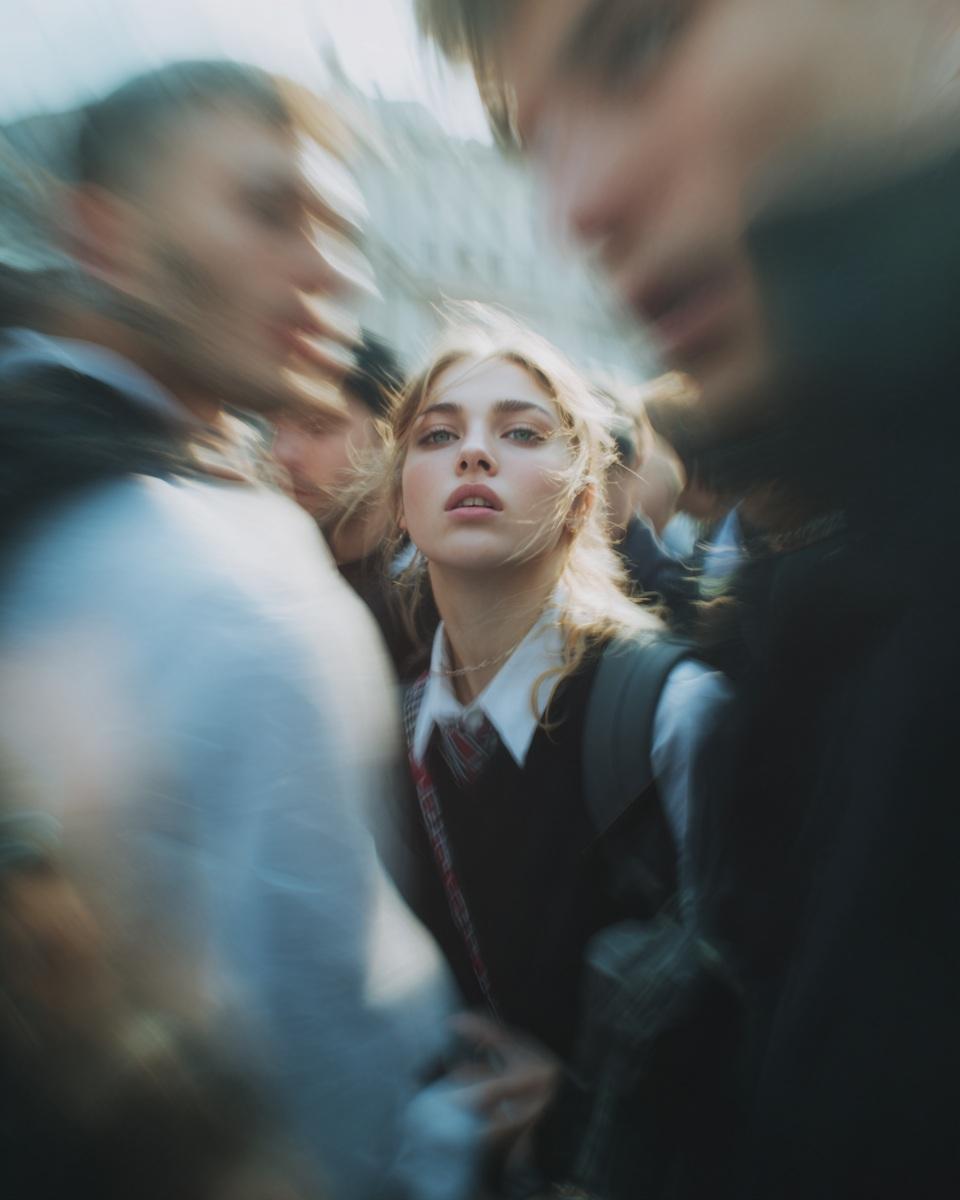
Paparazzi-style extreme close-up photo of a woman with striking facial features, caught off-guard while turning toward the camera. Face and shoulders only, shot from a low angle. Strong harsh on-camera flash, grainy high-ISO, raw candid street-photography feel. Background shows a crowded scene with motion blur (Paris Fashion Week atmosphere). Intense, spontaneous energy, imperfect and real. She is wearing a school uniform. Ultra-realistic, cinematic realism, high detail skin texture, slight lens distortion. Camera style: “35mm paparazzi lens, f/2.8, flash blown highlights” Look: “2000s tabloid photo aesthetic” Quality: “sharp focus on face, background heavily blurred and streaked”
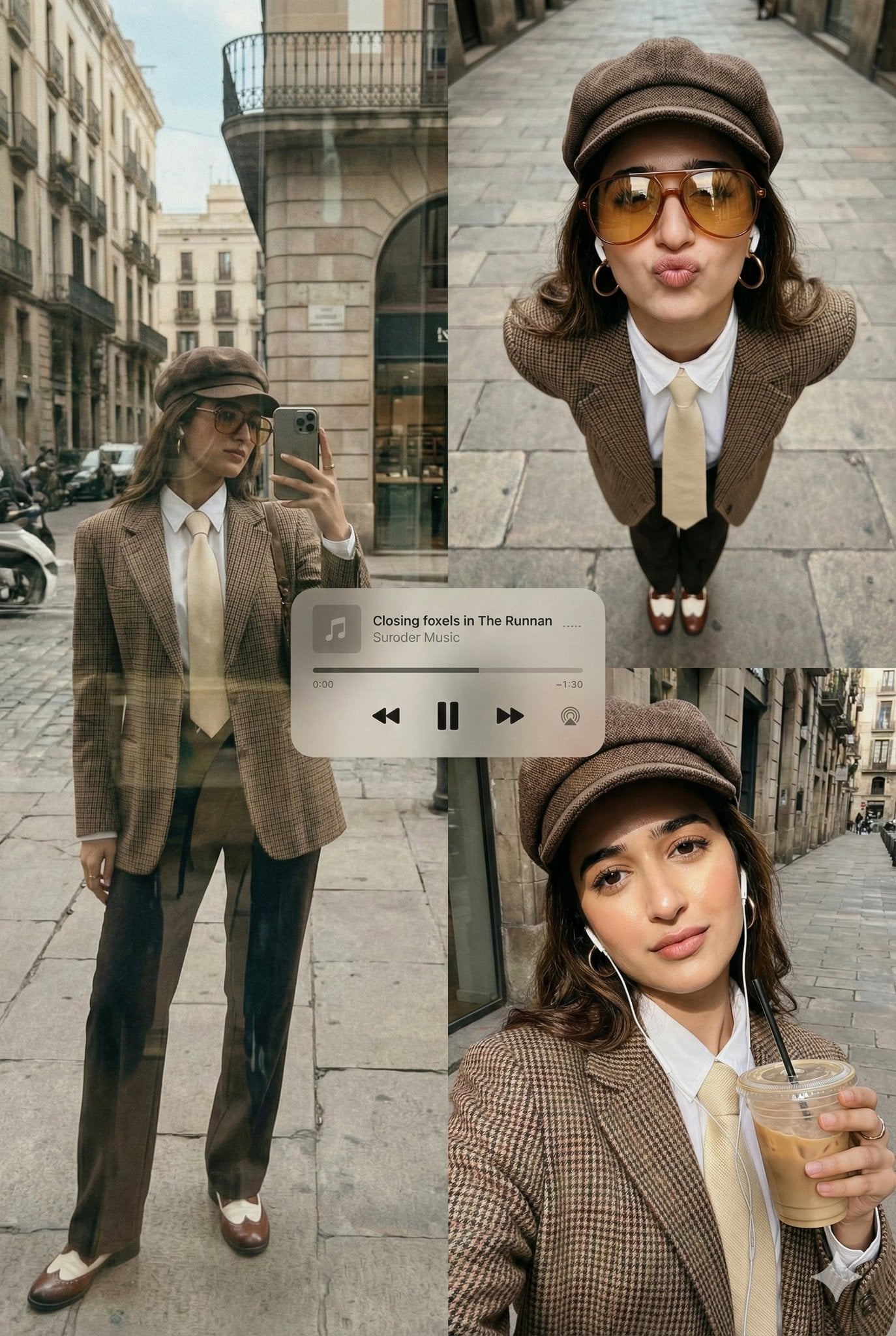
Transform this image [Upload Your Image] into a 64K DSLR shot resolution of A stylish urban fashion collage composed of multiple candid street-style shots arranged in a vertical split layout. The setting is a European-style city street with stone-paved sidewalks, historic architecture, and muted neutral tones. The overall atmosphere feels modern, artsy, and lifestyle-driven, blending fashion photography with everyday urban moments. The main subject is a fashion-forward young woman (same face as the uploaded image) with long black hair, wearing a coordinated vintage-inspired outfit. She has a confident, playful, slightly rebellious attitude expressed through her body language and facial expressions. Her outfit consists of a brown plaid blazer, a white button-up shirt, and a pale yellow tie, paired with loose dark trousers and two-tone leather shoes. She accessories with a brown fitted cap, large amber-tinted aviator sunglasses, silver hoop earrings, and a small shoulder bag. White wireless earbuds are visible in some frames, reinforcing a casual, modern lifestyle aesthetic. Left panel: A reflective mirror shot taken through a glass surface, showing the subject (same face as the uploaded image) holding a smartphone up to her face while taking a photo. The reflection slightly distorts the scene, creating layered depth with urban elements like street markings and building facades blending into the glass. Top-right panel: A high-angle shot looking down at the subject (same face as the uploaded image) as she leans forward toward the camera, lips pursed in a playful pout, emphasizing her expressive personality and bold eyewear. Bottom-right panel: A close-up selfie angle where she looks directly into the camera while holding an iced coffee in a clear plastic cup, earbuds in, with sunlight softly illuminating her face and sunglasses. Overlayed across the center of the collage is a minimalist music player UI, semi-transparent, displaying a paused or playing track with progress bar and controls, adding a digital, lifestyle-tech aesthetic. The interface floats above the imagery, blending seamlessly with the collage and reinforcing a "day-in-the-life" mood. Lighting is natural daylight with soft shadows. The color palette is muted and earthy browns, greys, yellows-enhanced with subtle film grain and a slightly desaturated, editorial color grade. The overall mood is effortlessly cool, candid, and contemporary, mixing street fashion, music culture, and casual city exploration. Style & Quality Tags: Street-style fashion photography, lifestyle editorial, urban aesthetic, candid moments, vintage-inspired outfit, natural light, muted color grading, subtle film grain, modern collage layout, high-resolution, Instagram editorial style. Octane render & Unreal Engine 5.
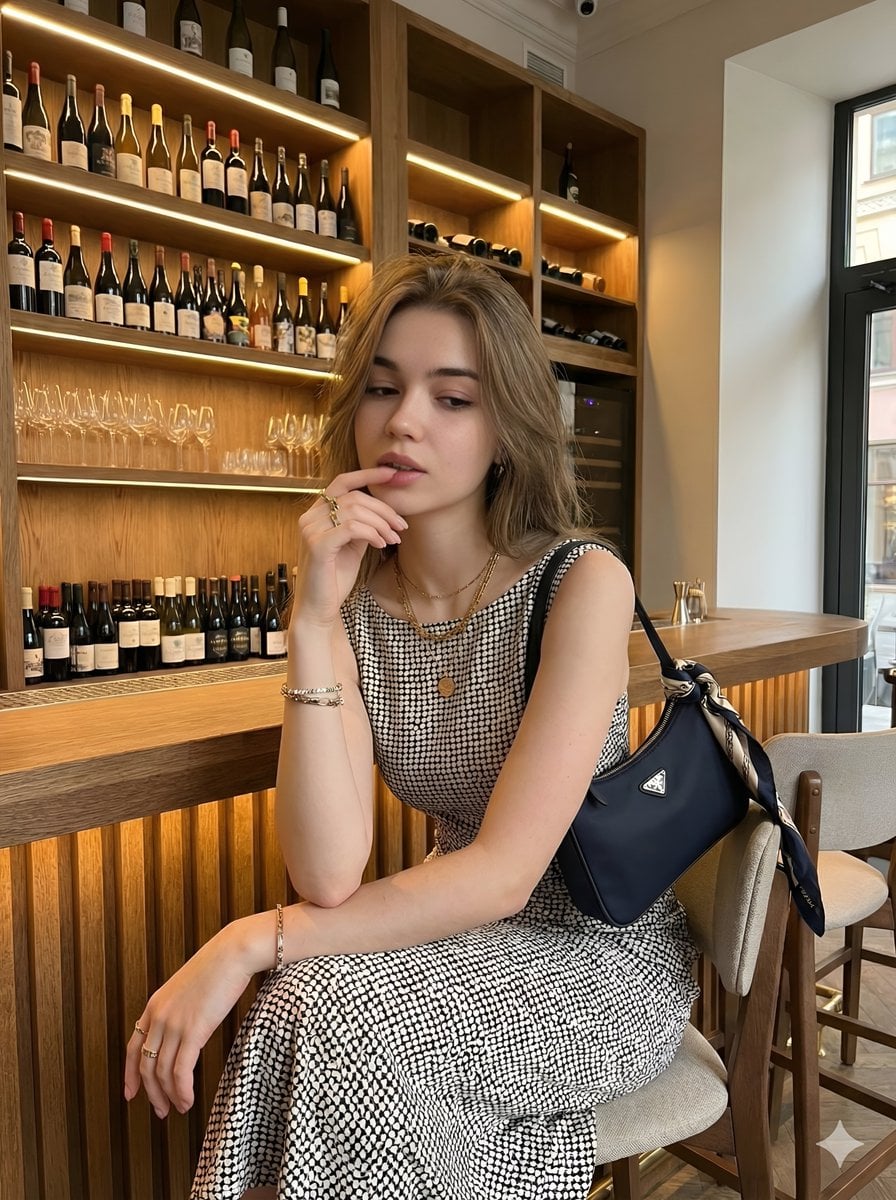
Young beautiful woman with long wavy hair, elegant sleeveless polka dot midi dress black and white pattern, sitting thoughtfully at stylish wine bar counter, hand near lips, luxury wine bottles wall background, Prada navy blue mini bag with silk scarf, gold jewelry, sophisticated chic atmosphere, soft warm lighting, cinematic, highly detailed, realistic Use my uploaded face image as the ONLY facial and identity reference. No other faces, models, datasets, or references are allowed.